






Tips for optimal flexible film coding
Flexible packaging film is a fast-growing category used in a wide range of products. A digital technology specifically designed for coding flexible film – Thermal Transfer Overprinting (TTO) – has numerous advantages over alternatives, but manufacturers must choose what best meets their application needs.
What is TTO?
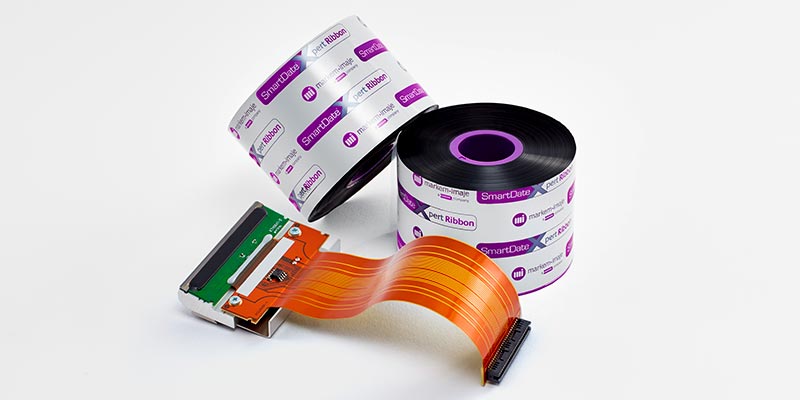
This technology is best suited to marking flexible films that are flat, before packs or pouches are filled. The main elements of a TTO printer are the printhead, the inked ribbon and the roller (for continuous applications) or the flat platen (for intermittent applications). When given a signal to print a predefined code, the printhead descends, pushing the ribbon and the packaging film against the roller. The heating elements related to the code heat up, melt the ink on the ribbon, and the melted ink is then transferred onto the packaging film.
The heating elements are embedded in a ceramic unit and individually heated to form characters such as letters and numbers. The ceramic unit protects the heating elements as they transfer the heat to the inked ribbon and print the message. Ceramic units vary in their ability to withstand repeated heating and cooling cycles, and to resist abrasion. Both factors affect printhead life and coding speed.
Why TTO?
Compared to mechanical approaches such as hot stamping or rotary coders, TTO provides greater uptime and less waste, while allowing the inclusion of real-time data. Compared to other digital technologies, such as continuous and thermal inkjet printing, TTO is typically more easily integrated into the packaging machine and provides better print quality.
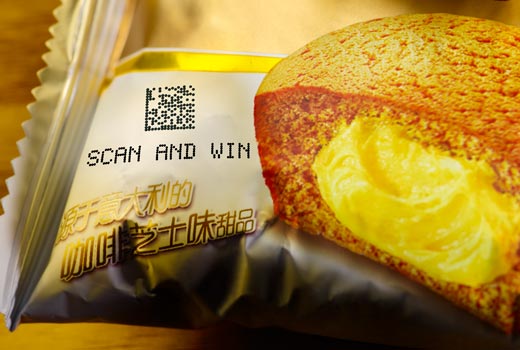
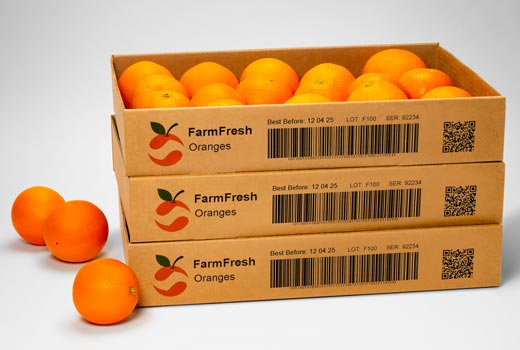
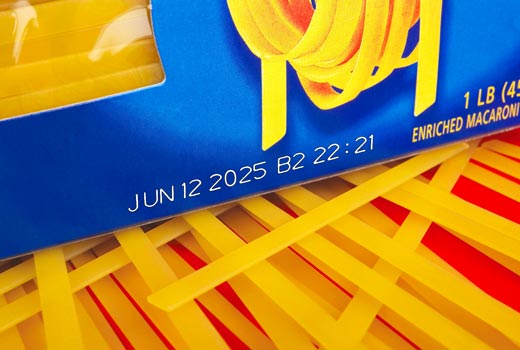
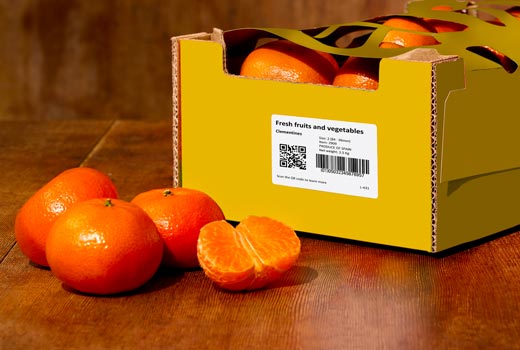
With a high resolution of around 300 dpi – approaching the quality of preprinted packaging – TTO is versatile, allowing barcode, logo and 2D coding. Pack rates of up to 120–160 packs per minute (ppm) or 1200 millimeters/second (mm/s) are achieved on average, though more advanced units can reach up to 455 ppm or 1800 mm/s.
Furthermore, TTO is reliable, with a relatively small initial capital outlay, as well as low maintenance and running costs. There is virtually no equipment warm-up time – it is ready within 60 seconds of being turned on. There is also zero risk of film perforation, unlike mechanical methods, where broken stamps can pierce the packaging.
Tips for selecting the right TTO for your application
① Choose the right ribbon
Most TTRs (Thermal Transfer Ribbons) have a mixed composition of wax and resin. However, in more challenging contexts involving extreme temperatures, oils or solvents, a high resin TTR is advisable to ensure crisp durable codes, the downside being a lower coding speed of around 300 mm/s.
Uptime and sustainability can also be improved by using TTR rolls that offer more prints per roll. These require less frequent changing, generate less roll waste, and reduce energy consumption. Ribbons with a back coating can also double the printhead life compared to other ribbons.
It’s best to avoid third-party ribbons. These can be cheaper than the coder supplier’s offering but could void the warranty and are more likely to cause premature printhead wear, leading to extra equipment expenses that outweigh the consumable cost advantage.
② Choose the right printhead
Standard printheads are robust enough for undemanding applications in ordinary factory environments, such as coding many food and beverage products.
Robust printheads with stronger ceramic coatings support printing in more challenging environments, where dirt, dust or stones are at high risk of scratching the ceramic surface. Using a standard printhead would result in the need to replace the printhead more frequently.
Premium printheads have recently been introduced to improve high resin coding speed in tough environments without compromising quality. This innovative printhead technology deals with heat fluctuations more effectively, and delivers the market’s fastest high resin coding, printing at 600 mm/s. Such technology is only available in Markem-Imaje’s SmartDate Xtreme Plus printhead.
③ Regular printhead cleaning
This may sound obvious, but it’s not always done frequently enough. Insufficient cleaning results in an accumulation of dust, dirt, and debris on the printhead, leading to poor and potentially unreadable codes. Cleaning the printhead with every ribbon change prevents such problems, while limiting downtime.
④ Operator training
Printhead life can also be affected by the print mode, printhead pressure, darkness setting and volume of printing. Operator training can make substantial savings by minimizing printhead replacement through better equipment usage.
For example, if the ribbon has been used for some time, printed characters may exhibit streaks, gaps or fading. Some operators try to solve this by increasing the darkness setting. Although this will enhance the print, the extra heat will shorten the printhead life. A better solution is to move the printhead slightly, so the heating elements are in better contact with the film.
We hope you’ve found these tips helpful. If you have any questions or comments, please get in touch!