




Turn to the thermal transfer printing technology TTO when coding on sustainable packaging
Thermal transfer overprinting (TTO), a type of thermal transfer printing, has evolved with the market, enabling companies and brands to achieve high-quality, compliant marking and coding on a new generation of sustainable substrates and packaging.
Much has been written about the transition from multilayer materials to more recyclable mono-material films, new recyclable films and even compostable packaging, as companies and brands respond to consumer demand for more sustainable packaging, traceable products, and demands from authorities for reduction of or taxes on plastics. Examples of the latter include the recent hike in the UK Plastic Packaging Tax and the imminent arrival of the Extended Producer Responsibility (EPR) legislation.
Similarly, elsewhere in Europe, the European Commission recently proposed new EU-wide rules on packaging through a proposed revision of the Packaging and Packaging Waste Directive, with the aim of ensuring that all packaging is reusable or recyclable in an economically feasible way by 2030.
In the US, several states have passed EPR laws, while in California, SB 54 – considered the toughest bill on plastics yet passed – requires an overwhelming majority of packaging to be recyclable or compostable by 2032.
Suffice to say that printing on sustainable substrates is no longer a niche issue: it is now a business imperative for packaging companies and brands, as well as suppliers of printing technologies. All are tasked with developing solutions that simultaneously achieve high quality, compliant marking and coding on these new more sustainable materials while maximizing production on multiple lines at high speed.
Here, we take a closer look at some of the new-generation of more sustainable materials and how working with the right partner can help successfully integrate them into the manufacturing process, as well as discuss what TTO is and how it can be used for consistent, high-quality printing on a range of flexible packaging substrates.
The rise of sustainable substrates
Mono-materials may be made from up to three layers of the same type of plastic material or co-extruded monolayer films and are easier to recycle; consequently, less material ends up in landfill. Multi-material, multi-layer packaging on the other hand usually is a type of polymer and has to be bonded with lamination adhesives and heat-seal coatings, for example, thus making it very difficult to recycle as the constituent parts have to be separated in order to do so.
To date, industry has favored these more complex materials for flexible plastic packaging thanks to their function, versatility and cost benefits. However, recycling can be difficult, or impossible, with packages having to be separated into their constituent elements in order to obtain high-quality recycled products.
According to a recent report by market intelligence firm Smithers, the market for mono-material flexible polymer packaging is expected to grow to reach a value of $71 billion in 2025, driven by the need for companies to redesign existing multi-material solutions into mono-material packaging.
Food packaging such as wraps and bags, for instance, now consists of polyethylene terephthalate (PET) and polylactic acid (PLA) films or mono-films (PE and PP), as opposed to multilayer/multi-material solutions. Similarly, packaging for food and fast-moving consumer goods (FMCG) are moving from multi-material composites to PP or PE mono-films while rigid and semi-rigid containers, bottles and jars are increasingly made from mono or recyclable materials and clear PET.
Why use TTO and TTR?
As we mentioned at the outset, providers of printing solutions are having to respond to this seismic shift with technologies that can print accurately and consistently on new-generation materials.
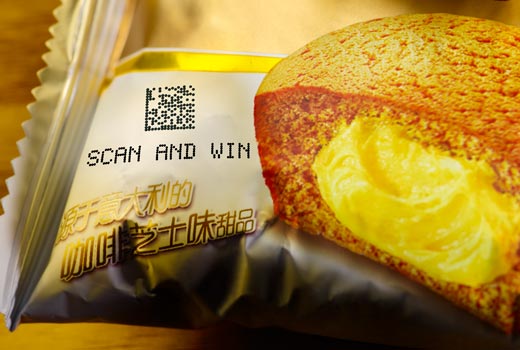
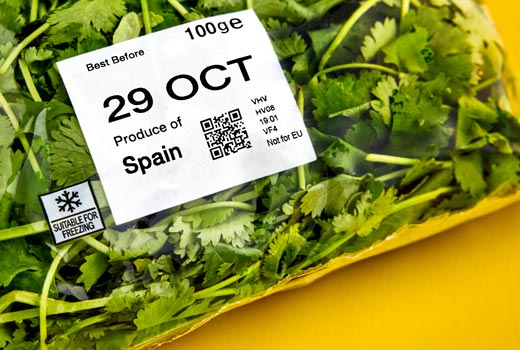
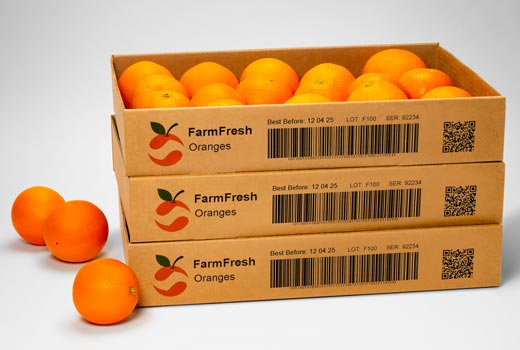
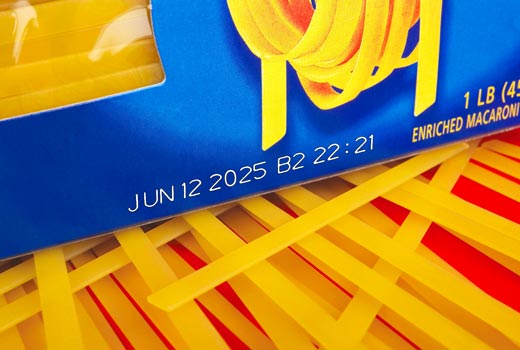
During TTO, heat is used to transfer ink from a thermal transfer ribbon (TTR ) onto various packaging substrates used in the food, beverage and pharmaceutical industries. Engineered to work specifically on flexible substrates, TTO has been designed to print high-resolution barcodes and variable information such as best-by dates and serial numbers – without impacting how the packaging film artwork and design looks to the consumer.
Markem-Imaje has pioneered thermal transfer printing technology for over three decades. The company’s SmartDate® Series, the industrial thermal transfer overprinter series, provides reliable high-quality codes on flow-wrappers, bags, tray seals, pouches, sachets, vacuum packs or labels.
TTO celebrated its 30 year anniversary in July 2023 and is an example of a tried and tested solution that has continued to evolve with industry needs, meaning is a trusted solution of choice for printing and packaging companies are brands today. TTO is fast enough to cope with the highest production speeds in flexible film packaging, particularly in the food and beverage (F&B) space. The recently launched Markem-Imaje SmartDate® Xtra 3530 and SmartDate® Xtra 3750 ribbons are ideal for new eco-friendly substrates.
Secondly, Markem-Imaje TTO equipment is easy to install and integrate with existing production equipment with virtually no disruption or downtime and is easy for operate.
One of the other big differentiators versus other technologies is TTO’s reliability and consistency and that it has been designed to fit onto OEM packaging machines that are used to create the bags and packs. Thermal transfer overprinting has the right form factor for integration. It is highly reliable, not just in terms of maintenance, but also the clarity of the finished print, as well as consistency from batch to batch and ribbon to ribbon, resulting in confidence and peace of mind for manufacturers.
Traceability and supply chain optimization
TTO can also be used to ensure traceability and supply chain efficiency, an issue that has steadily risen in importance, especially with the advent of new web-connected 2D barcodes, which offer superior product traceability and visibility beyond the existing pricing and inventory information.
By partnering with a trusted technology provider with proven domain experience such as Markem-Imaje, TTO can be integrated into existing OEM packaging machines to enable accurate and efficient printing of 2D codes on a wide variety of substrates. This makes updatable, brand-controlled product information available to the entire supply chain, leading to efficiency gains in terms of automatic stock management and traceability – using 2D to enable AIDC from manufacturing production lines to the consumers.
In summary, the thermal transfer printing technology TTO helps to facilitate the industry-wide transition to more eco-friendly flexible film packaging and offers manufacturers and brands peace of mind by guaranteeing high-quality, compliant marking and coding on a range of sustainable materials.