


The EU has strict new labelling regulations for wines: how can you comply with them?
Product source and ingredient information have been part and parcel of a concerted effort by the European Union in recent years to significantly boost the availability and accessibility of information for all foods and beverages. However, until now, wines and aromatized wines have been exempted from strict new ingredient labeling requirements, having only to display allergens and energy value because of the unique nature of the product. With wine soon to be required to comply with EU ingredient labelling requirements, wine manufacturers will face new complexities with using a one size fits all ingredient labelling approach as the exact composition of wines may actually change following the production, bottling and storage of a wine.
No more exceptional treatment for wines
From 8 December 2023, wine brands within the EU will be required to comply with the labelling requirements for all other packaged foods and beverages with detailed ingredient and nutritional information required on the product. The United States is also considering such legislation in the future. This is a major challenge for producers not only because of the amount of information that will have to be displayed but also given the propensity of wines to experience composition changes, especially those kept in storage for a long time like vintage wines.
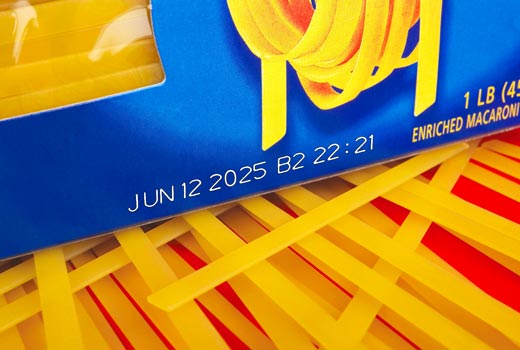
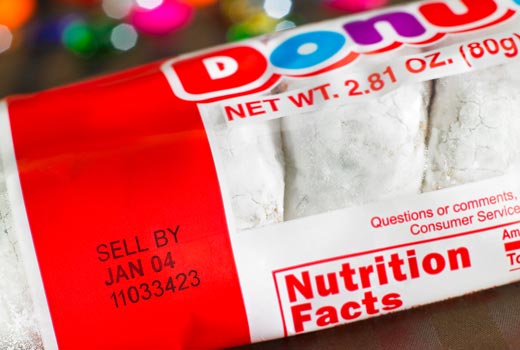
Whilst the vast majority of wine labels are currently pre-printed by label printing companies before bottling, the exact composition of wine can shift considerably not only following storage but also during bottling or blending. Additionally, sugar, acidifiers or stabilizers may be added right before bottling, according to order or product characteristics. This difficulty to accurately record the correct composition on product labels could then impact on regulatory compliance as well as consumer purchasing decisions and trust.
Static, pre-printed QR codes may not comply
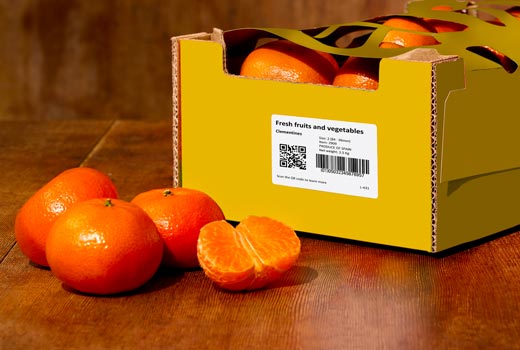
Under the new Regulation (EU) 2021/2117, all wines and aromatized wines produced or sold in the EU will need to supply full ingredients and nutritional information on the product. Because the information is considerable and could crowd and spoil brands’ label designs, pre-printed, static QR codes on the label of the bottle and connected to the brand, have been touted as a solution.
However, due to the batch level variations and the possibility of compositional changes in the product, even when bottled from the contents of the same tank or barrel, QR codes pre-printed onto labels prior to bottling run the risk of not being compliant with the incoming regulation. This could occur if the latest ingredient composition is not updated at the time of labeling. Another way in which current QR codes fall foul of the new rule is that they often direct users to brand websites which are marketing and sales-orientated. Under the new regulation: “Electronic labels cannot contain any other information intended for sales or marketing purposes”, though this is still to be finalized.
Use inline-printed unique or batch-specific QR codes
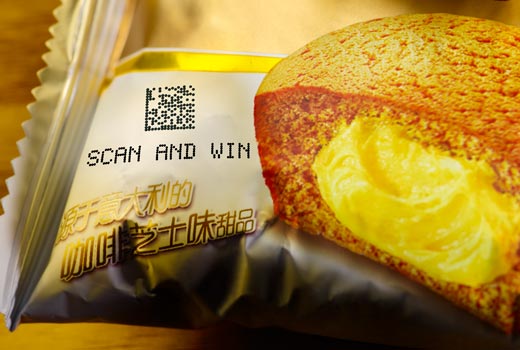
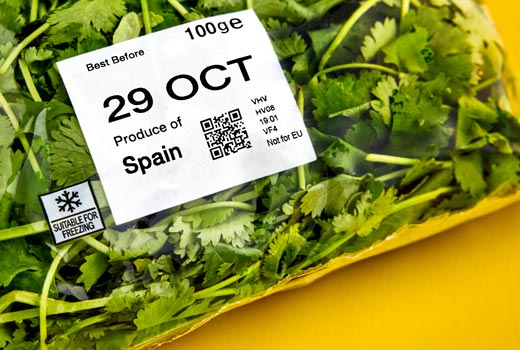
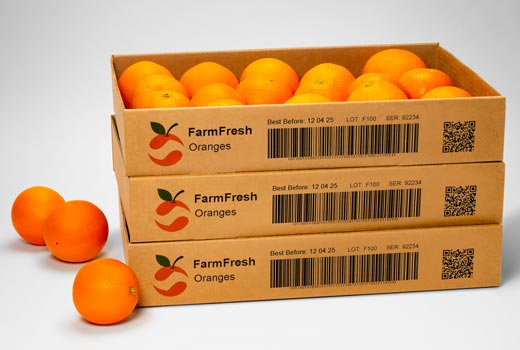
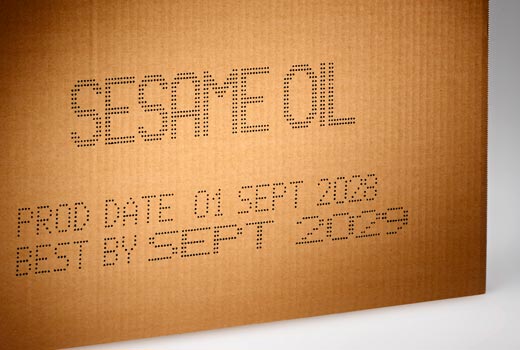
The solution still lies with the QR code, which can be compliant with the new regulation, but each code must either be unique for each bottle of product, like a serial number, or for each batch which has the same composition of ingredients. Although unique QR codes linking to product information could still be produced externally by label suppliers, the easiest way to implement compliant QR codes with fully accurate information will be to print them at the production line. This means that one unique label can be used for the entire production lot and a specific QR code be added at the very last second. In this way, the producer can avoid the hassle of handling smaller batches of labels for the same specific production run.
Using a product or batch-level serial printed QR code means each wine production line will require a space reserved for printing the QR code on the label, which although it will only occupy a tiny area, must be of extremely high print quality. While both labels and QR codes could still be produced externally, there is also a fully-compliant one-stop shop solution available: using laser or thermal transfer overprinting (TTO) technology together with software able to generate dynamic, QR codes and cameras to verify their legibility.
Connecting data to serial QR codes
Printing the QR code on the label is only one part of the solution, and wine brands will also need to link QR codes to content from their enterprise data systems to provide accurate ingredient and manufacturing information per batch to ensure regulatory compliance and product transparency with consumers. Wine brands can also use a serial or batch level QR code to link to other, non-ingredient-related product data to enable both more supply chain tracking and visibility, and consumer engagement, if regulations allow for sales or marketing use in the future. Having the right software solutions able to design both the digital consumer experience for ingredient labels, but also to connect enterprise data systems to the packaging line and QR codes will be critical for regulatory compliance as well as providing the best consumer experience.
Combined print and software solution
Markem-Imaje successfully integrates both laser and TTO printers onto production lines for printing very high-quality labels and QR codes for multiple brands and products. Its Packaging Intelligence suite powered by CoLOS ® software is ideal for use in tandem with its printing technology to generate unique or batch-specific QR codes, while the Blue Bite SaaS solution provides the tools for brands to create and manage the digital experiences on mobile devices to display digital ingredient lists as well as provide other content to engage with consumers.
CoLOS® software links the production line to a brand’s ERP, automatically retrieving information from serialization data to the all-important latest ingredient composition and makes it available via a unique and dynamic QR code. This code can achieve the highest level of accuracy and accessibility of the data required. Upon printing, CoLOS® software assures the quality and legibility of the QR code by using highly powerful cameras for verification.
A dynamic coding future
This new EU regulation also assists in the shift to the newly launched GS1 Digital Link that will, in time, become the new standard for global product codification, eventually replacing the traditional 1D barcode. QR codes printed at the production line can comply with Digital Link requirements for both consumers, producers and retailers: the former can access both dedicated non-commercial data like ingredients and marketing information using their Smartphone, while different functionality within the same QR can be exclusively accessed by retailers to charge but also check authenticity, or by the manufacturer for traceability, anti-counterfeit and recall handling purposes.