



Secondary printing and coding for production line optimization
In the food and beverage sector every production line is being challenged. There are increasing demands on manufacturers to run faster and longer, minimize errors, improve sustainability and respond to consumers’ expectations for new product variants. The result: an increasing need for more efficient lines and ever faster factory changeovers.
In short, food and beverage manufacturers are being asked to do more while ensuring that product marking, labelling and coding is accurate and seamless.
At Markem-Imaje we have very rewarding relationships with our customers and work closely with them to understand their challenges. This collaboration informs how we respond—with products that support, not just optimal printing and coding, but a more efficient process overall.
For secondary printing and coding, advancements in technology now offer manufacturers the opportunity to reach compliance standards at the same time as streamlining operations.
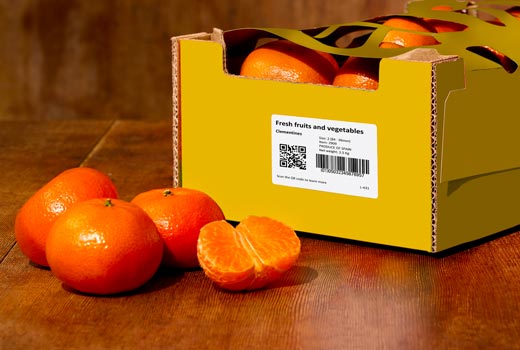
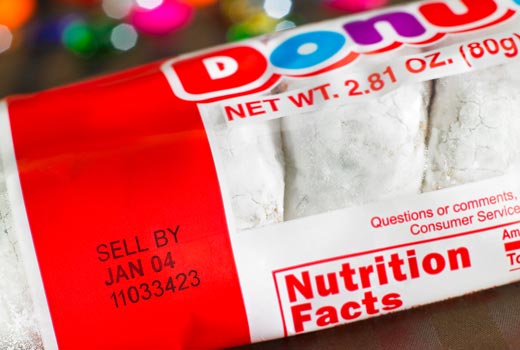
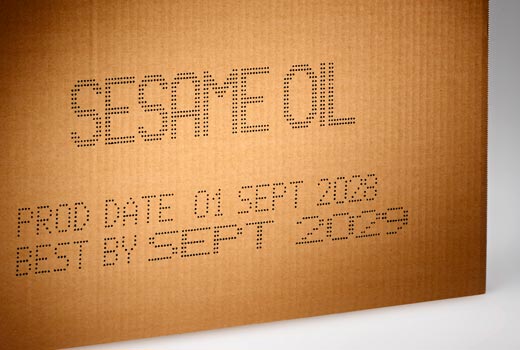
A first step in improving efficiencies in secondary coding is working with a supplier who has the deep industry expertise to advise. We have recently built on our background in this space and introduced to the United States and Europe the 5940 G, Touch Dry® high-resolution inkjet coder. It delivers GS1-128 compliant, label-free and high-resolution coding, branding and text on secondary packaging.
As well as reducing waste, this new technology also limits handling and labor—resulting in a far more streamlined operation. Plus, our wax Touch Dry® inks used with the new 5940 G, offer a solution which is free of volatile organic compounds (VOC). This product is only available with MI—so matching your particular needs with the right supplier is key.
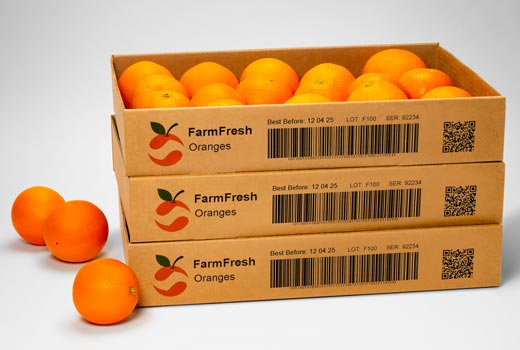
In Europe, as in most regions, multiple retailers now require a minimum of grade C GS1-128 compliant barcodes. Additionally, when products are packed on pallets, two-sided coding brings significant value. It ensures that the code is always visible on each box when packed. MI’s 5940 G coder is configurable with up to four print heads, allowing for simultaneous printing on two sides of a box.
How consumables are handled is another important consideration for manufacturers looking to improve uptime. For example, MI’s 5940 G coder was designed with an extra-large container for its Touch Dry ink to significantly reduce operator intervention. And the containers can be replaced without stopping production.
An optimized production line runs faster, produces more, wastes less and ultimately increases revenue.
We hope you’ve found this helpful. If you have any questions or comments, please get in touch!
In short, food and beverage manufacturers are being asked to do more while ensuring that product marking, labelling and coding is accurate and seamless.
Small changes for big gains
It has become imperative for all manufacturers to consider every step of their production line and integrate even the smallest efficiency to improve operations. Each incremental advancement is a step closer to full optimization.At Markem-Imaje we have very rewarding relationships with our customers and work closely with them to understand their challenges. This collaboration informs how we respond—with products that support, not just optimal printing and coding, but a more efficient process overall.
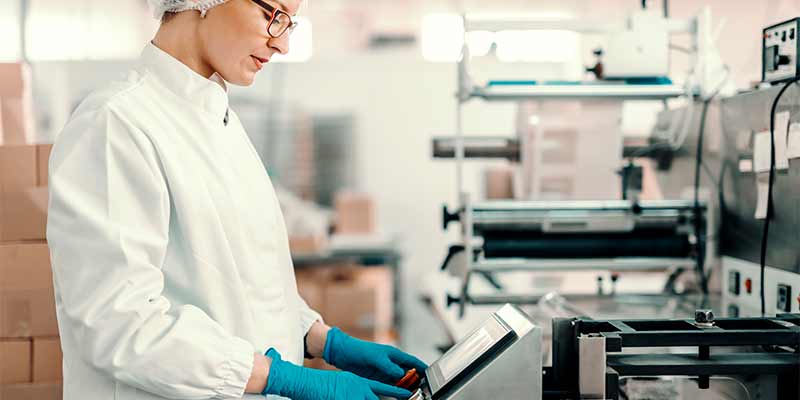
For secondary printing and coding, advancements in technology now offer manufacturers the opportunity to reach compliance standards at the same time as streamlining operations.
Identifying improvements
We often find that our customers can make some immediate efficiency gains by transitioning to direct coding. There are multiple benefits among the different approaches to secondary coding, but when a customer’s objective is to reduce their use of consumables and maximize up-time, direct coding is an excellent option.A first step in improving efficiencies in secondary coding is working with a supplier who has the deep industry expertise to advise. We have recently built on our background in this space and introduced to the United States and Europe the 5940 G, Touch Dry® high-resolution inkjet coder. It delivers GS1-128 compliant, label-free and high-resolution coding, branding and text on secondary packaging.
As well as reducing waste, this new technology also limits handling and labor—resulting in a far more streamlined operation. Plus, our wax Touch Dry® inks used with the new 5940 G, offer a solution which is free of volatile organic compounds (VOC). This product is only available with MI—so matching your particular needs with the right supplier is key.
In Europe, as in most regions, multiple retailers now require a minimum of grade C GS1-128 compliant barcodes. Additionally, when products are packed on pallets, two-sided coding brings significant value. It ensures that the code is always visible on each box when packed. MI’s 5940 G coder is configurable with up to four print heads, allowing for simultaneous printing on two sides of a box.
Thinking beyond the obvious
It may not seem immediately obvious yet a move to secondary direct printing can drive efficiencies in other ways too. We have many customers who manufacture products for multiple brands. As a result, they hold large inventories of differently branded secondary packaging. This monopolizes space as well as capital and is open to error. A move to direct secondary coding allows these customers to reduce that inventory to one uniform box in a simple step.How consumables are handled is another important consideration for manufacturers looking to improve uptime. For example, MI’s 5940 G coder was designed with an extra-large container for its Touch Dry ink to significantly reduce operator intervention. And the containers can be replaced without stopping production.
An optimized production line runs faster, produces more, wastes less and ultimately increases revenue.
We hope you’ve found this helpful. If you have any questions or comments, please get in touch!