




Attention all wine producers: Are you ready for this year’s incoming EU mandatory wine labeling regulations?
A major change for all EU wine producers and those supplying the market will mean that, from 8 December this year, for the first time, wines will require extensive late-stage ingredient and nutritional information included on their physical and/or digital wine labeling.
Until now, due to its ability to alter in composition, wine labels have been exempted from strict ingredient labeling requirements, with the obligation only to display allergens and energy value. Under the new Regulation (EU) 2021/2117, all wines and aromatized wines produced or sold in the European Union, including those with reduced alcohol, will also need to supply full ingredients and nutritional information on or via the product label – a major challenge given the unique properties of wine.
Following production and during its subsequent bottling and storage, the exact composition of wine can change, making a universal or one-size-fits-all approach to the labeling of wine bottles challenging at the very least, or even inaccurate.
Pre-printed labels may best be avoided
This change implies extensive changes to wine labels, requiring far more information than at present, with all the implications for marketing implied, and, even more challenging, the measurement of the exact composition of wine at, or following, bottling. This means that information captured on pre-printed labels well before bottling could possibly end up being inaccurate though their use will still be permitted. Sugar, acidifiers, or stabilizers may be added right before bottling, according to order or product characteristics, with the possibility of altering the ingredient composition recorded on a pre-printed label. The chances of altered composition are even higher when it comes to wines conserved over years like vintage wines, possibly giving rise to the risk of incorrect ingredient labeling.
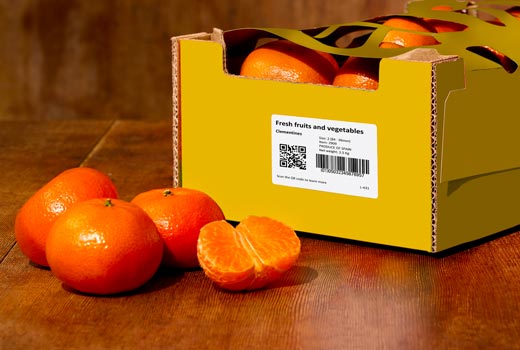
The solution to recording the most up-to-date ingredient information lies with the introduction of unique 2D codes, especially the QR, of a dynamic nature, which are printed at, or as close to, the production line as possible. These codes must be applicable down to the batch level, where there will be the same composition of ingredients.
Traceability on-the-fly
Beginning soon, each winemaker or labeler will require a space on the production line reserved for marking the QR code on the label which must be of extremely high print quality to allow easy scanning by Smartphones, although it will ideally only occupy a tiny area on the product, in order to preserve brand identity. Laser and thermal transfer overprinting (TTO) technology are the most suitable marking technologies which, when combined with dedicated software able to generate dynamic QR codes and cameras to verify their legibility, guarantee compliance with the new so-called Wine Regulations.
The Markem-Imaje CoLOS ® Packaging Intelligence software is ideal for generating unique or batch-specific QR codes, the latter being sufficient to comply with the new EU regulation. The technology easily integrates with both laser and TTO printers onto production lines to print very high-quality labels and is used by multiple brands.
CoLOS® software links the production line to a brand’s ERP, automatically retrieving information from serialization data to the all-important latest ingredient composition, making it available via a unique and dynamic QR code to achieve the highest level of traceability. Upon printing, CoLOS® software assures the quality and legibility of the QR code by using highly powerful cameras.
QR code caveat
The QR and other dynamic 2D codes are the solution to this requirement for full ingredient and nutritional information on the product post-production because the amount of information is considerable and could crowd and spoil brands’ label designs. However, under the new regulation, the following information must now be present on the label of the bottle itself or available via a dynamic 2D barcode or QR code:
- - Category and source of wine
- - Name of bottler, producer and vendor, or importer in the case of wines produced outside of the EU
- - Lot number and quantity of product
- - List of intolerances and allergens
- - Alcoholic strength (%)
- - Sugar content (for sparkling wines only)
- - Expiration date for de-alcoholized wines (10% alcohol content or less)
- - Full ingredient list with nutritional and energy values per 100 milliliters
Importantly, the ingredient information which must be in an EU language and which we suggest could be accessed by a 2D code like a QR, must not be displayed alongside any form of sales or marketing material. This is a violation of the regulation which thus requires winemakers to set up separate microsites to provide this ingredient information. Using a link from an existing wine’s website risks falling foul of the law because of the associated tracking software used to track customer data which, by EU law, cannot be retrieved. Any failure to provide this detailed new information will incur fines and removal of the product from the market. Any wine already produced before 8 December this year is not subject to the new ingredient information demands, whenever it is sold the standard implementation rules related to management of inventory on the market.