



The 2D barcode revolution is here: Are you ready?
The new GS1 Digital Link is set to standardize web-enabled product 2D barcodes and GS1 standards, allowing the FMCG industry to access a wealth of data and react more quickly to trends across the entire value chain. Manufacturers and brands must be prepared if they wish to maintain their competitive advantage.
To the naked eye, the imminent transition to the 2D barcode may seem like a relatively small step in the evolution of the FMCG sector; in reality, the new GS1 Digital Link standard constitutes a giant leap forward for the entire industry, a once-in-a generation opportunity for manufacturers to hit the reset button on how they leverage and communicate their brands.
Central to this revolution is the premise of ‘hot data’, a step change from traditional static data to dynamic information extracted using a 2D barcode that acts as a web-based URL. This connects manufacturers and brand owners to the digital world, giving them the agility to react much more quickly and efficiently to trends across the entire value chain – from the distributor to retailers and consumers.
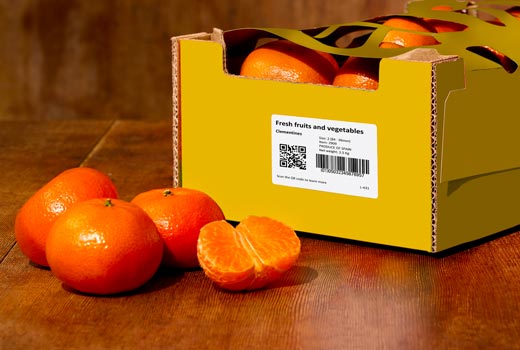
In this brave new world, the familiar linear EAN/UPC barcode can be replaced by a single unique 2D barcode that connects every product to the internet by embedding web addresses that leverage the global trade item numbers (GTINs). This web-enabled 2D will strengthen brand loyalty, and transform efficiency, traceability, sustainability, and still go beep at the retail checkout.
In terms of game-changing technology, at Markem-Image, we would liken the switch from linear to 2D barcodes to the transition from fossil fuel to electric vehicles in terms of its positive disruptive potential.
Linear versus the 2D barcode
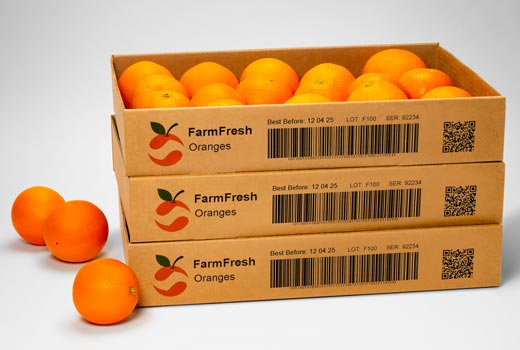
Traditional linear barcodes started appearing on retail product labels in the mid-1970s. Comprising a maximum of 13 digits (the aforementioned GTINs), they were the first step on the road to unique product identification, allowing retailers to identify specific products and track inventory.
“The original GS1 barcode launched a digital revolution that forever changed the way the world does business – with a simple scan a product could be identified and connected to a computerised system,” says Steven Keddie, Senior Director, Automatic Identification and Data Capture, and SME lead at the global standards organisation GS1. Markem-Imaje has for years been implementing GS1 standards, including the more recent GS1-128 barcode, across our different coding technologies.
“Companies of all sizes need barcodes to correctly identify and sell their products in stores or online. By enabling the sharing of trusted, quality data everywhere, the next generation of 2D barcodes has the ability to help tell the story behind products – where they originated, what they contain and where they have been during their supply chain journey,” Keddie says.
“This, in turn, removes friction between business partners and improves performance and safety across the entire supply chain, while the power of the captured data is helping to solve large and complex industry challenges,” Keddie tells MI.
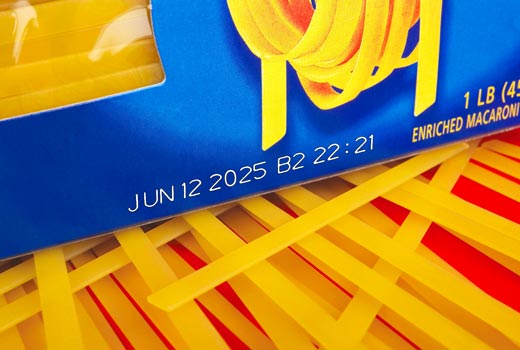
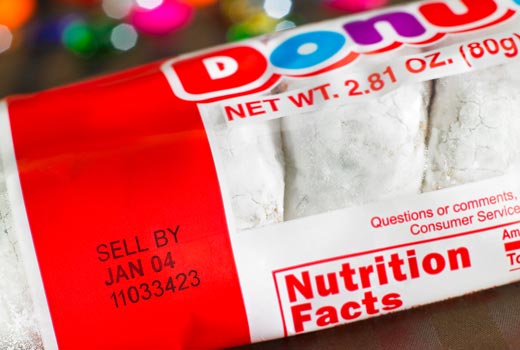
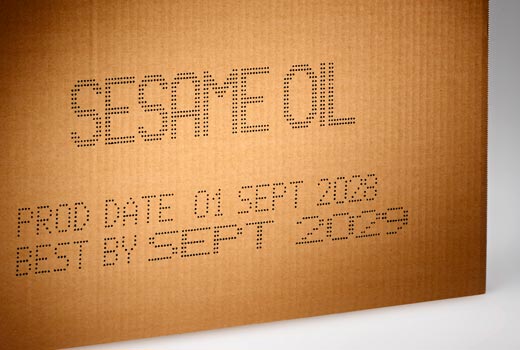
The existing EAN/UPC barcodes have their limitations, they cannot carry more granular data – lot identification numbers or expiry dates, for example – they can also be significantly larger than 2D codes and, crucially, cannot leverage web-based information without an additional app.
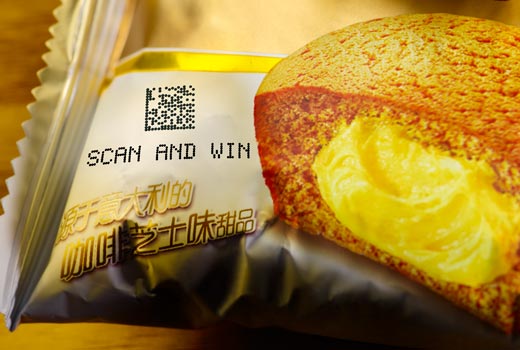
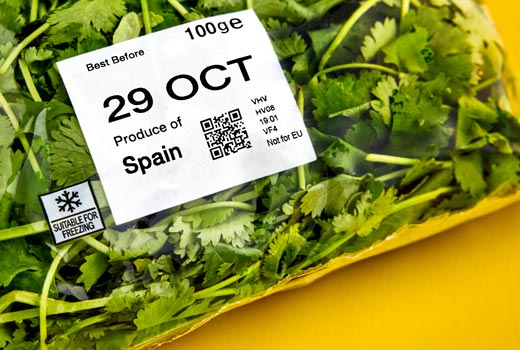
Recently, many brands have responded to demand for more data by adding trackable QR Codes or Data Matrix barcodes to their product. Despite the obvious benefits, they do also present some challenges by confusing consumers and creating some issues with Point-of-Sale (POS) system scanning, not to mention taking up valuable space on the packaging design.
“Consumers, business partners and regulators are demanding more product information. A QR Code leveraging GS1 Digital Link inside will unlock the trusted brand owner’s authorised data for all parties and, since the barcode is web-enabled, it connects directly to the web,” explains Keddie.
The transition to the 2D barcode: key drivers
In response, the not-for-profit GS1 is overseeing an industry-wide change. GS1 Digital Link is a simple, standards-based structure for encoding information into 2D barcodes that allows it to leverage the web adhering to GS1 standards. These include GS1 trackable QR codes and the more compact GS1 DataMatrix. Such GS1-compliant 2D barcode variants enable everything from POS scanners to smartphone apps and cameras to obtain data about a product, providing brand-controlled product information across the entire supply chain. And, critically, the information behind the barcode can be updated in real time.
The transition from linear to 2D barcodes is being driven by multiple factors, including:
- - Demand from the market for more product traceability and visibility beyond mere pricing and inventory information;
- - Acknowledgement that SKU codes are outdated in the age of Industry 4.0;
- - In the wake of the COVID-19 pandemic, increased demand from tech-savvy consumers for more interaction that can be easily scanned and accessed via a smartphone.
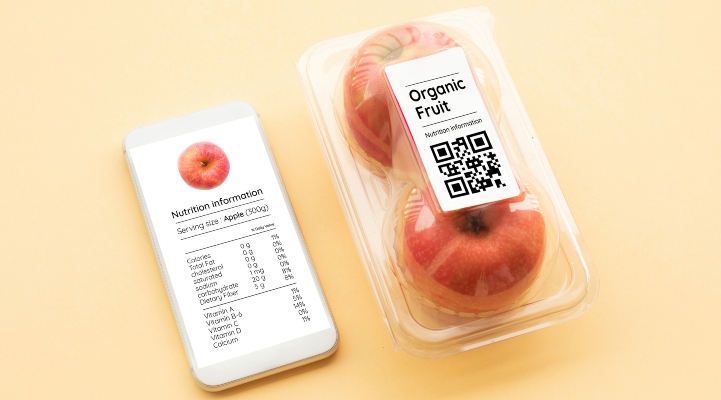
“In addition to consumer drivers such as improved customer engagement, more product information on food safety, ingredients and allergens, and digitally enabled content – coupons, ship to home capability and store location, for instance – the GS1 Digital Link enabled 2D codes offer retail and brand manufacturers multiple advantages,” Keddie tells us. “These include efficiency gains in terms of automatic stock management (lot, date, automatic mark down), traceability – using 2D to enable Automatic Identification and Data Capture (AIDC) from manufacturing production lines to the consumers – and improved packaging, as 2D barcodes can be smaller than linear codes.”
My colleague, Rémy Fontanet, MI Product Manager, concurs. “At present, some products have both linear and 2D codes, but we envisage that being replaced with a single universal standard,” he remarks. “This will not only contain the GTIN but an abundance of additional data that brands and retailers can use to improve serialisation and traceability – anti-counterfeiting and regulatory compliance, for instance – as well as efficiency across the entire FMCG supply chain.”
This is of particular value to manufacturers in a high-inflation economic environment. Companies are under increasing pressure to ensure efficiency on the production line on small runs at high speeds in order to deliver their products to market quickly (at the speed of social media) and at the right price. The 2D barcode revolution promises to give brands more flexibility in terms of customization on the line directly, and also when it comes to responding to competitor product releases and market trends.
Barriers to 2D barcode adoption
Universal adoption of 2D codes is still some way off, for a variety of reasons. High-speed printing solutions are limited and ensuring good print quality can be difficult to achieve for manufacturers. Scanner and printer manufacturers are rising to the challenge, however, working on solutions that meet high speed and print quality conformance, while a GS1-led focus group of solutions providers is currently developing an instructional guide for manufacturers and retailers.
At MI we see that both manufacturers and brand managers are understandably asking what implications the new barcode standard may have, not only in terms of investment in new technology but also the potential impact on working processes, quality control and efficiency.
In future, items may have unique, serialized information, meaning each individual product has its own reference, requiring investment in software and hardware that can capture both standard and unique information, and then reproduce that at high speed on a variety of substrates.
Markem-Imaje’s expert team is at the forefront of developing marking solutions that address just these sorts of issues, paving the way for brands and manufactures to reap the full benefits of the new GS1 Digital Link standard.
The future now belongs to the 2D barcode
The new 2D barcode conformance standards are already in use in retail, and, according to Keddie, GS1 is receiving positive feedback from both retailers and consumers, with the former reporting no reduction in items per minute scan rates, as well as significant efficiency improvements, while the latter group are already benefitting from easy connections to digital content.
We believe that FMCG companies are at different stages of maturity on the path to implementing
The GS1 Digital Link inside the 2D barcode. For example, some customers are already asking for 2D code solutions; however, a potential issue is that the information they can provide at present only uses a fraction of the technology’s potential.
This is the type of question that companies in the FMCG space need to be asking themselves now if they wish to enjoy first-mover advantage in the brave new world of 2D barcodes. Those that find the correct answers can look forward to reaping the many benefits of this game-changing innovation.
During the recent GS1 Global Forum 2023 event, key players, including manufacturers & distributors, demonstrated that the revolution is underway. At Markem-Imaje, we are ready, having unveiled a new disruptive technology, Super Piezo InkJet (SPI), that will print and use the full potential of GS1 Digital Link standard and other compliant 2D barcodes on even the most challenging applications.
YOU MIGHT ALSO BE INTERESTED IN:
Markem-Imaje Solutions: Compliant GS1 128 barcodes