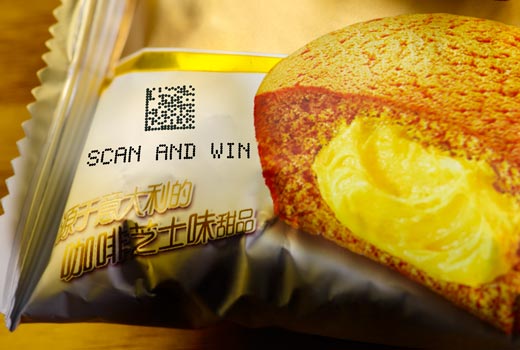
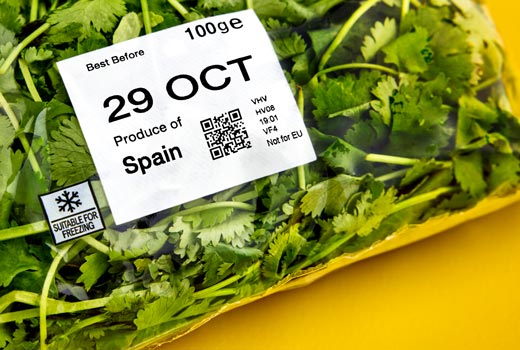
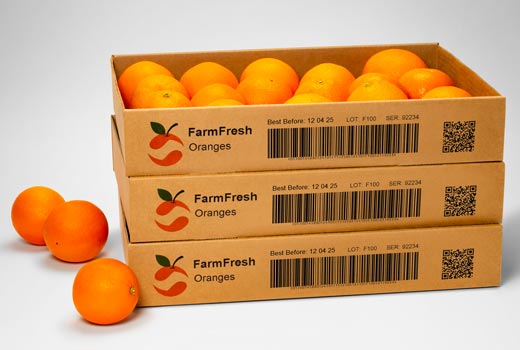
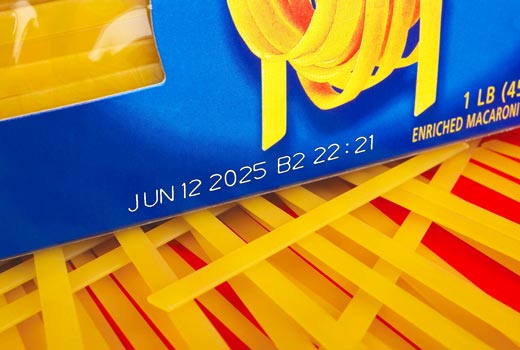
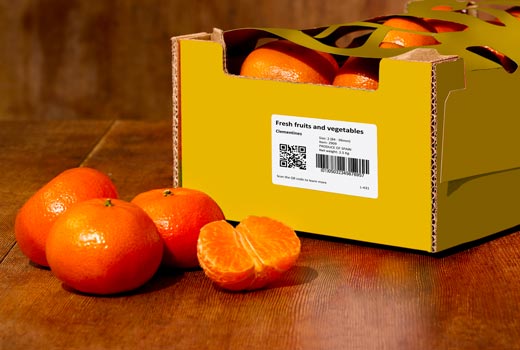
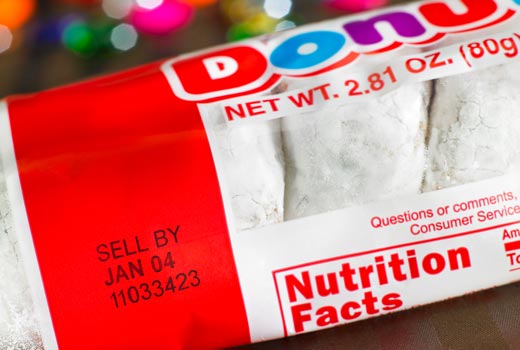
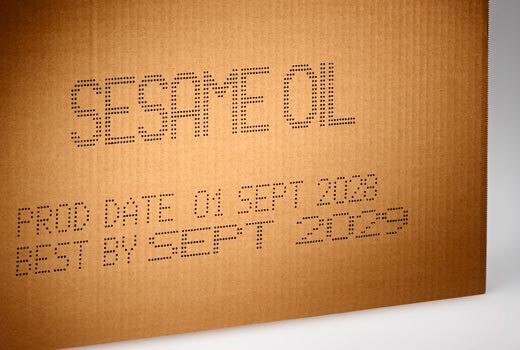
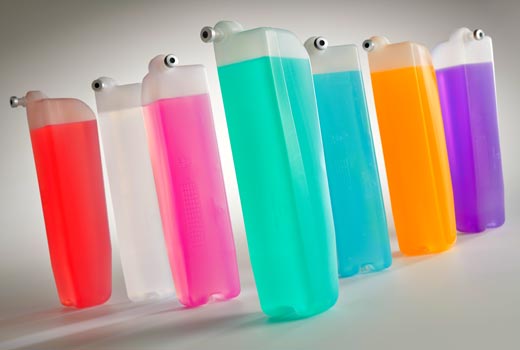
Industrial laser marking printers are non-contact coding systems that use a focused beam of light to mark permanently and directly onto product surfaces, without inks or consumables. Markem-Imaje laser coders operate across three core technologies - CO2, Fiber, and UV - each optimized for distinct materials and production environments. Whether deployed as a laser printing machine for packaging or a laser marking system for industrial components, these solutions deliver high-resolution codes - logos, barcodes, and QR codes and Data Matrix codes - at line speeds compatible with modern manufacturing. Industries served include food packaging and beverage, pharmaceutical, cosmetics, automotive, and electronics.


CIJ Printers (Continuous Inkjet)
chevron_right
Thermal Transfer Overprinters
chevron_right
Large Character High Resolution Piezo
chevron_right
Laser Coders
chevron_right
Print and Apply Labeling Machines
chevron_right
Thermal Inkjet
chevron_right
Valvejet Large Character
chevron_right
Supplies
chevron_right

Laser Marking Machines for Industrial Coding
Three technologies, one supplier. Permanent, chemical-free coding across a wide range of substrates ideal for high speed applications.
| Non-contact printing technology | ✔ |
| Text, barcodes, and graphic coding 2d codes | ✔ |
| Maximum print speed - Line speed | ✔ |
| User interface | ✔ |
| Software | ✔ |
| IP rating | ✔ |
| Size | ✔ |
| Code print quality | ✔ |
| OEM integration | ✔ |
| DPI | ✔ |
| Connectivity | ✔ |
| Camera scanning options | ✔ |
| Energy consumption (two cycles) | ✔ |
| Configurable I/Os | ✔ |
| Printer orientation | ✔ |
| Operating temperature | ✔ |
| Substrates | ✔ |
| Printhead integration | ✔ |
| BCCS - Laser class 1 solution | ✔ |
| Parts Making | ✔ |
| Low maintenance laser | ✔ |
| IP head separated from controller | ✔ |
| Minimal substrate penetration | ✔ |
CO2, Fiber, and UV laser marking printers
Different materials and production environment demand specialized laser technologies. Each type of laser offers unique printing characteristics, making it suitable for a specific marking application. Selecting the right solution ensures optimal precision, durability, and aesthetic quality, while also maintaining efficiency and safety in the working environment. Whether marking paper, cardboard, flexible foils, metals, plastic, glass or organic materials, our range of laser solutions provides the flexibility and performance required to meet even the most demanding industrial standards.
Fiber laser marking
Our fiber laser printers use an active-fiber laser source where the beam is generated and delivered through passive optical fibers. It produces a very fine, concentrated beam of light, allowing for high-precision marking on foils, cans, metals such as stainless steel, aluminum, brass, and titanium. Fiber lasers are ideal for marking text, serial numbers, barcodes, QR codes, and detailed logos that must remain readable and durable even in harsh environments.
CO2 laser printers
CO2 laser printers use a gas mixture-primarily carbon dioxide- as its lasing medium. It emits a longer wavelength, which makes it perfect for organic and non-metallic materials like paper, laminated paper, wood, glass, leather, acrylic or certain plastics like PET or PLA. CO2 laser printers offer durable, maintenance-friendly solution designed for continuous, high speed production lines.
UV laser marking
An UV laser printer operates at a much shorter wavelength than Fiber or CO2 lasers which results in higher absorption and high-contrast marking on flexible films and other plastic based materials. It allows for extremely fine prints without generating heat that could damage sensitive materials. This technology is ideal for HDPE, PP, PE, packaging films, coated metals, and electronic components, as well as decorative glass, where precision and clarity are essential.
Pricing and laser marking solutions
Every laser marking solution is assessed individually to ensure the best balance for quality, efficiency, and value. Factors such as material type, design complexity, laser technology, production environment and volume are carefully considered to deliver an optimal and cost-effective solution. To assure best marking solution we are performing demonstrational samples prepared to meet specific application. Our sales teams provide tailored quotations that accurately reflect the technical requirements and scope of each order.
What is an industrial laser marking?
An industrial laser marking is a non-contact process that uses a focused laser beam to create permanent codes, symbols, or identifiers directly on a product or component surface. It provides advanced solutions that are designed for high-speed, permanent marking and identifiction in modern manufacturing environments. Engineered for accuracy and uninterrupted integration with the production lines our lasers perform incessantly even in harsh industrial environments. With Ingress Protection reaching up to IP66, humid conditions, heat, or dustour lasers promise continuing operation, higher uptime and durability.
What materials cannot be laser marked?
The key in marking different substrates is choosing the right technology and parameters. Our tailored approach where we carefully select and optimise most suitable laser for a specific material guarantees that our customers receive the right solution for their needs. Contact a Markem-Imaje specialist to assess substrate compatibility for non-standard materials.
Which industries use laser marking machines?
Laser marking machines are used across varius industries, including food packaging and beverage, FCMG, pharmaceutical, cosmetics, automotive, and electronics manufacturing. Our laser systems are extensively used to mark on the packaging as well as can be used for direct part marking. Data such as serial numbers, DataMatrix codes, QR codes, logos and other messages can be applied precisely and directly onto the surface promising full process control, improved quality assurance and compliace with industry standards.
What is the difference between CO2 and fiber laser marking?
CO2 laser marking systems use a wavelength of range 9,300nm to 10,600nm, making them effective on organic materials such as glass, wood, cardboard, and most polymers. Fiber laser marking systems operate at 1,064nm, producing a highly concentrated beam suited for foils, cans, metals, hard plastics. Fiber lasers offer longer operational lifespans, while CO2 systems provide broader substrate compatibility for packaging applications.
How does a laser coding system integrate with production line software?
Markem-Imaje laser coding systems connect to production environments through CoLOS® software, enabling centralized message management and real-time control across single or multi-site operations. CoLOS® integrates directly with ERP and MES systems, ensuring that batch numbers, expiration dates, and serialized identifiers are driven by accurate, system-verified data.
All
MORE FILTERS
LESS FILTERS
laser
DOWNLOAD PDF
mi-btn mi-btn--primary-color-01 mi-btn--small mi-btn--fixed-bottom
REQUEST A QUOTE
mi-btn mi-btn--primary-color-02 mi-btn--small mi-btn--fixed-bottom
/en/contact-us
Find your product
add
MORE FILTERS
-
A taste for change: an overview of key beverage industry trends and the use of laser and CIJ coding technology
Product packaging and coding is a critical element for all beverage producers, whether large or small. -
Ensure brand protection for the candy market with laser marking
With growing consumer awareness and evolving regulatory requirements driving the need for greater traceability, transparency and thus brand protection, there is a shift towards additional data embedded within product coding on candy box packaging.
How laser marking is leaving an indelible mark on the cosmetics industry
In the cosmetics world, packaging is integral to the product. High-end items like luxury moisturizers, perfumes and make-up are defined not only by their contents but by the look, feel and quality of the materials that contain them. Cosmetics packaging and containers are required to often protect valuable substances and present an attractive, high-quality appearance, while also ensuring product traceability and authenticity. Their failure to do so can present significant risks to cosmetics brands. At Markem-Imaje, we harness industrial laser solutions to provide easier answers to these types of challenges.
Flexibility of the Industrial laser
The versatility and safety of the laser coding machine makes it ideally suited to an industry in which packaging often includes glass, hard or painted plastics, or bare or painted metal. A combination of various laser wavelengths (based on CO2, Fiber, UV laser technology) allows to successfully mark on all the packaging materials and to acquire the desired effect whether it is a fine line marking of lot number and expiry date, a QR code, or a decorative image (logo).
CO2 laser has an inherent thick marking line and is often used for marking on fast-moving, high-volume lines. UV has the thinnest line and besides basic contrast marking of production data is often used for precise, decorative printing. UV and fiber laser are ideal for bare hard plastics and bare metals such as aluminium or shiny alloys, while UV laser is ideal for decorative marking on glass, like logos and graphics. CO2 is highly suited to painted metals and simple marking on glass and hard or painted plastics.
Cosmetics products may be packed in secondary packaging like a cardboard box, which is then wrapped in transparent cellophane. For coding on this type of cardboard, CO2 laser is more popular, though fiber laser may be used if the cardboard is painted. A key difference between CO2 and fiber coding is that while fiber can go through transparent cellophane and mark cardboard, a CO2 laser would have to mark directly onto the cardboard.
With its suitability for a wide range of substrates and applications, the industrial laser is simplifying the cosmetics packaging conundrum. But laser isn’t only highly effective, it’s also much more aesthetically attractive than some other coding technologies. This is vital in an industry in which the look and feel of packaging is central to product identity.
Fighting back against counterfeiters
High value, high profile and easy to transport. These are the attributes that make cosmetics of all kinds a major target for counterfeiters. Trends like that of “dupes” or counterfeits being openly advertised on TikTok are helping to drive the ongoing surge of fakes in the market. This presents significant harm to brands and their customers.
But what if cosmetics packaging could function as an essential component of an anti-counterfeiting and diversion detection program, enhancing brand security? We’re helping cosmetics companies to achieve this. We’re doing this by combining laser coding that delivers a 1D or 2D code with brand protection through CoLOS®, our software that facilitates product verification and traceability, which helps to ensure product compliance and easily integrates with the rest of our best-in-class equipment, as well as third-party information systems, such as ERP (Enterprise Resource Planning Systems) and hardware.
This keeps products authentic, safe and connected, from the factory to the customer. While counterfeiters do add barcodes to products, our technology leverages the QR or barcode already on product packaging, turning the laser printed mark into a unique digital e-Fingerprint which is difficult to duplicate. This gives cosmetics companies end-to-end visibility and detailed insight about each specific product as it moves through the supply chain.
Laser is not only versatile enough to align with the changing shape of cosmetic products but also with their changing size. We’ve noticed a trend in the industry in which companies are marking not only the packaging, but also the products themselves.
Our laser coding solutions allow companies to mark directly onto some products, particularly for industries like cosmetics. The use of UV laser coding enables us to complete very small-scale printing directly onto products, for example, a very small bar code or a small QR code. This type of coding can be done on almost any part of the cosmetic product.
Whatever the scale required, adding markings directly onto products, where applicable, as well as packaging adds yet another layer of assurance. As well as being valuable for customer peace of mind, it’s also highly beneficial for internal tracking.
Better value chain insights
Precise supply chain insight is hugely valuable. This knowledge is another way in which cosmetics companies benefit from our combination of laser coding and brand protection. Businesses can trace the value chain more precisely and easily. This allows them to better understand where they are selling, how they are selling, who the customer is, where they’re located, which channel to the market is performing best - and other key insights.
Nurturing customer loyalty
Customer loyalty is key to luxury cosmetics brands. Our laser printing and brand management solutions help companies to nurture that all-important customer rapport.
Cosmetics consumers can benefit from peace of mind that the product they have bought is authentic and of a high quality. Supported by our brand protection suite, laser marking also helps to strengthen customer relationships by enabling them to go online and use the product code to easily find information on, for example the cosmetic’s composition, and even offers relating to their new purchase. It’s a powerful way to turn the supply chain into a customer loyalty asset.
Reducing environmental impact
Brands in the cosmetics space can benefit from the use of laser coding to help them meet their ESG goals while also enhancing customer perception. Cosmetics companies are responding to growing consumer demand for more sustainable products by using more renewable substrates and refillable products. Laser’s flexibility ensures that they can successfully mark these types of substrates without any reduction in brand integrity or quality.
With consumers increasingly concerned about the green credentials of the products they buy, brands can demonstrate their use of laser print as part of their environmental strategy, as it doesn’t use solvents or inks of any kind.
There is no need to buy, transport and store inks and solvents, nor are they present in the production or plant environment, which makes it a far more pleasant and healthy place for workers.
Added to this, the assured permanence of laser coding with no possibility of rubbing off, combined with our brand protection suite enables companies to have better oversight of their supply chain – another advantage in the progression towards a greener business.
Shaping the future of cosmetics
The cosmetics industry is defined by innovation, both for products and packaging. Cosmetics are increasingly diverse in their form and size. This presents complex challenges for brands. Laser coding is more than up to addressing this problem as it is able to adapt to concave, curved and spherical products. This flexibility enables companies to innovate without compromising on quality or product safety.
Laser coding allows them to do something different to stand out in a crowded market without risking quality, whether that is by adopting fully transparent packaging or a using shiny black metal casing, for example.
A huge benefit of our approach to laser coding for our customer is that, rather than enforcing a one-size-fits-all approach, we create a bespoke solution for each product. We invite manufacturers with a new or complex product design to outline their particular goals for a specific product and then create samples for them using different laser printers. This ensures that we find exactly the right match of laser coder for that particular product, however complex the design.
The mark of success
These are interesting times for high-end cosmetics brands. In the current turbulent economic climate, the “lipstick effect” means consumers are turning to affordable luxury to treat themselves. Customer demand is predicted to rise and brands continue to innovate in response to this. Yet alongside these opportunities, manufacturers are under great pressure. Counterfeiting continues to present a significant problem. Markets remain competitive. However, by leveraging the advantages of laser marking, leading cosmetics brands can stay trusted and top of mind in their industry.
Please share this post on your favorite network…


-
Ensure laser safety for coding operations with customized Class 1 installations
CO2, UV, and fiber lasers represent some of the fastest, most precise, durable and least environmentally-impactful coding technologies, increasingly favored by ever more market segments. However, their power and wavelength can present potential laser safety risks from exposure to the beam. -
Beverage coding: which laser technology should I choose?
The high production rate in the drinks industry makes applying best-before dates challenging. While certain printing technologies can print at high speed, the codes are not permanent, opening the door to issues such as counterfeiting and non-compliance...
Please complete all fields below and we will reply to you as quickly and efficiently as possible. Thank you.


 Quick Access Tools