










The Hidden ROI of Inline Printing
Why Late-Stage Customization Changes the Economics of Packaging
Inline variable printing turns dynamic QR codes from a compliance cost into a supply chain advantage.
- One substrate, one artwork: variable content (market, retailer, pack count) printed at the line via ERP work orders
- Dynamic QR code on pack updates without reprinting
- Fewer SKUs equals to less inventory, fewer changeovers, lower procurement complexity
- CoLOS® automates the data-to-print pipeline, eliminating manual intervention at changeover
- ROI benchmark: compare against SKU proliferation costs, not against doing nothing
Why Most Manufacturers Get This Wrong
Most conversations about GS1 Digital Link start with compliance. What do we need to do? When is the deadline? How do we get a dynamic QR code on pack?
Those are fair questions. But they tend to frame the whole transition as a cost to manage. And when that's the starting point, it's easy to underinvest in getting it right.
The manufacturers who get the most out of this shift tend to ask a different question early on: not just how do we comply, but what does this make possible?
When that's the question driving the project, inline variable printing stops looking like a regulatory burden and starts looking like something genuinely useful.
Why the numbers don't seem to add up
The objection I hear most often is that the investment — new print technology, system integration, process changes — doesn't justify itself. The costs are clear. The benefits feel vague.
That's usually because the calculation is too narrow. If you're only looking at inline printing as a way to put a batch number and expiry date into a QR code, then yes, the return is thin. You're replacing something that worked with something more complex to meet both regulatory requirements and retailer specifications.
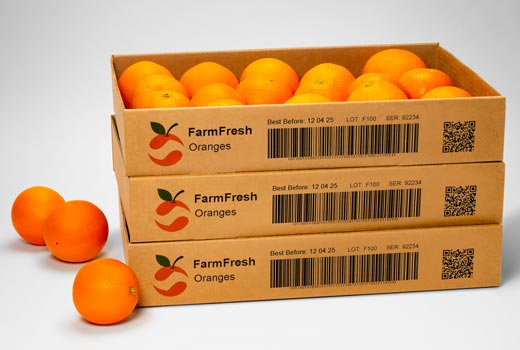
Inline variable printing is what makes a dynamic QR code actually work. The code on pack links to content that can be updated, while the data printed around varies by batch, market, or retailer, all from a single production run. The result is a dynamic information layer on your packaging.
The SKU problem that rarely gets costed
Here's a simple example of where the real value tends to sit.
Imagine a manufacturer producing the same product for two retailers. Same formulation, same production process. But one retailer wants a pack of seven units, the other wants eight. Each has different branding requirements and market-specific labelling.
So the manufacturer runs two separate packaging SKUs. Two artworks. Two inventory pools. Two changeovers every time the line switches between customer runs.
With inline variable printing, that complexity is handled at the line. One substrate. One artwork. The elements that vary — pack count, retailer text, language, regulatory symbols — are printed at the point of production, driven by the work order. When the line moves from one customer order to the next, the packaging stays the same. The data changes.
The knock-on effects matter too. Consolidating two SKUs into one increases your purchasing volume on that substrate. It reduces the inventory you need to hold. It removes the risk of running short on one variant while sitting on excess of another. Across a large portfolio, those gains are significant.
The same logic applies across markets
A wine producer shipping to France, the US and China faces different labelling requirements in each market — different formats for alcohol content, different health warnings, different regulatory symbols. Most manage this today through separate label SKUs, one per destination.
With late-stage customization, that same producer could run a single label substrate and print the market-specific content at the line, based on the shipment destination in the work order. Same wine. Same bottle. Same label design. Different printed content per pallet.
This isn't unusual. Any manufacturer operating across multiple markets, multiple retail customers, or multiple regulatory environments is dealing with some version of this. The specifics vary. But the underlying cost of managing it through separate SKUs — rather than through inline printing — is rarely examined carefully. When it is, the case for investing in inline capability tends to be stronger than expected.
It's a data question as much as a printing question
For late-stage customization to work, the production line needs to know, at the moment of printing, which work order is active and what variable content to apply.
In practice, that means the ERP system becomes the engine behind it all. Work orders carry the information that drives the print — destination market, retailer, pack count, regulatory variant. The dynamic QR code is simply where that data shows up on the physical product. This is where a platform like CoLOS® becomes central to the operation. CoLOS® connects directly to ERP systems, translating work order data into precise print instructions at the line, automating what would otherwise require manual intervention at every changeover.
This is why getting the foundations right matters. Manufacturers who are clear about their data structure — what's static, what varies by production run, what's unique per unit — are the ones building something they can actually use. A dynamic QR code only delivers on that promise if the underlying data infrastructure support it. A static QR code locks in one destination at print time, a dynamic QR code stays flexible. But neither is useful without clean, structured data behind it. Those who add a QR code without that clarity tend to find that the infrastructure doesn't support what they want to do with it later.
Are you comparing against the right baseline?
Inline printing does require investment. There's no getting around that.
But the more useful question is what you're comparing it against. Most ROI calculations benchmark against doing nothing, or against a basic pre-printed compliance solution.
A better comparison is against the ongoing cost of SKU proliferation, the working capital tied up in packaging inventory, the procurement complexity, the operational cost of changeovers, the artwork management overhead. Those costs are real and recurring. They just rarely get attributed to the packaging complexity that causes them.
When you run the numbers against that baseline, the investment in inline variable printing starts to look less like a compliance cost and more like a supply chain improvement with a real payback.
Compliance is what's bringing most manufacturers to this conversation right now. But the value doesn't come from complying. It comes from what you build in the process.