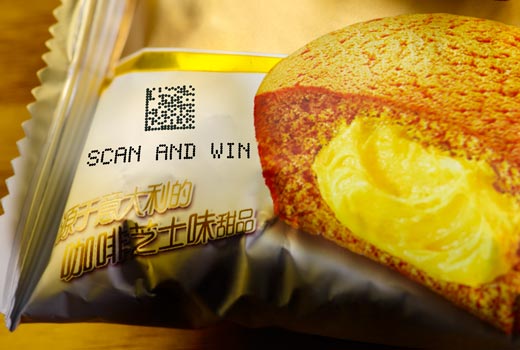
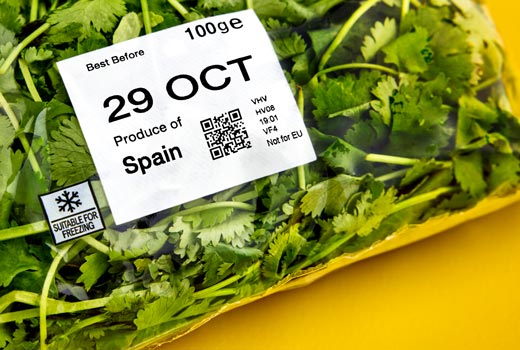
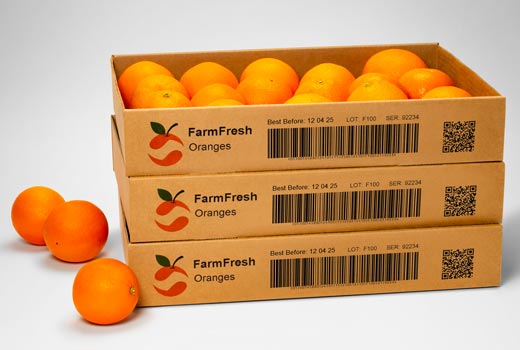
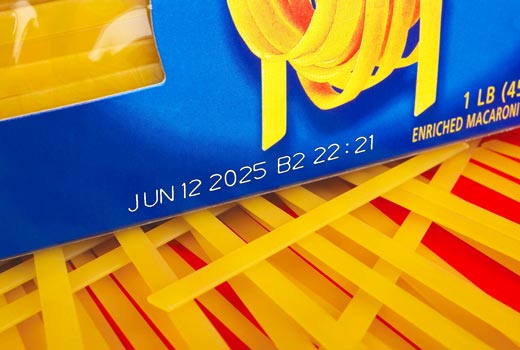
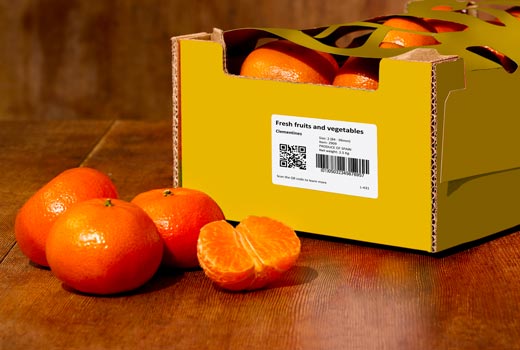
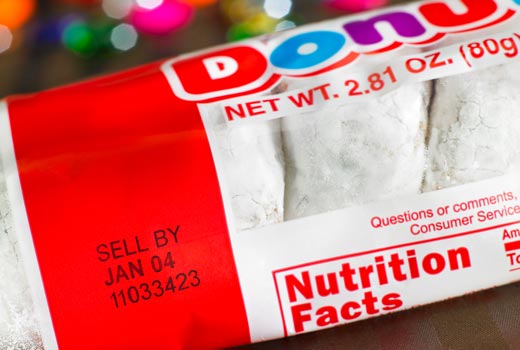
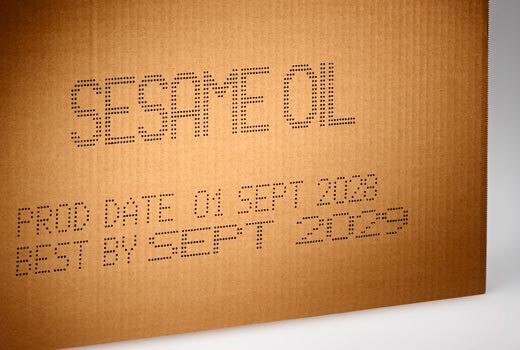
Industrial laser marking printers are non-contact coding systems that use a focused beam of light to mark permanently and directly onto product surfaces, without inks or consumables. Markem-Imaje laser coders operate across three core technologies - CO2, Fiber, and UV - each optimized for distinct materials and production environments. Whether deployed as a laser printing machine for packaging or a laser marking system for industrial components, these solutions deliver high-resolution codes - logos, barcodes, and QR codes and Data Matrix codes - at line speeds compatible with modern manufacturing. Industries served include food packaging and beverage, pharmaceutical, cosmetics, automotive, and electronics.


CIJ Printers (Continuous Inkjet)
chevron_right
Thermal Transfer Overprinters
chevron_right
Large Character High Resolution Piezo
chevron_right
Laser Coders
chevron_right
Print and Apply Labeling Machines
chevron_right
Thermal Inkjet
chevron_right
Valvejet Large Character
chevron_right
Supplies
chevron_right

Laser Marking Machines for Industrial Coding
Three technologies, one supplier. Permanent, chemical-free coding across a wide range of substrates ideal for high speed applications.
| Non-contact printing technology | ✔ |
| Text, barcodes, and graphic coding 2d codes | ✔ |
| Maximum print speed - Line speed | ✔ |
| User interface | ✔ |
| Software | ✔ |
| IP rating | ✔ |
| Size | ✔ |
| Code print quality | ✔ |
| OEM integration | ✔ |
| DPI | ✔ |
| Connectivity | ✔ |
| Camera scanning options | ✔ |
| Energy consumption (two cycles) | ✔ |
| Configurable I/Os | ✔ |
| Printer orientation | ✔ |
| Operating temperature | ✔ |
| Substrates | ✔ |
| Printhead integration | ✔ |
| BCCS - Laser class 1 solution | ✔ |
| Parts Making | ✔ |
| Low maintenance laser | ✔ |
| IP head separated from controller | ✔ |
| Minimal substrate penetration | ✔ |
CO2, Fiber, and UV laser marking printers
Different materials and production environment demand specialized laser technologies. Each type of laser offers unique printing characteristics, making it suitable for a specific marking application. Selecting the right solution ensures optimal precision, durability, and aesthetic quality, while also maintaining efficiency and safety in the working environment. Whether marking paper, cardboard, flexible foils, metals, plastic, glass or organic materials, our range of laser solutions provides the flexibility and performance required to meet even the most demanding industrial standards.
Fiber laser marking
Our fiber laser printers use an active-fiber laser source where the beam is generated and delivered through passive optical fibers. It produces a very fine, concentrated beam of light, allowing for high-precision marking on foils, cans, metals such as stainless steel, aluminum, brass, and titanium. Fiber lasers are ideal for marking text, serial numbers, barcodes, QR codes, and detailed logos that must remain readable and durable even in harsh environments.
CO2 laser printers
CO2 laser printers use a gas mixture-primarily carbon dioxide- as its lasing medium. It emits a longer wavelength, which makes it perfect for organic and non-metallic materials like paper, laminated paper, wood, glass, leather, acrylic or certain plastics like PET or PLA. CO2 laser printers offer durable, maintenance-friendly solution designed for continuous, high speed production lines.
UV laser marking
An UV laser printer operates at a much shorter wavelength than Fiber or CO2 lasers which results in higher absorption and high-contrast marking on flexible films and other plastic based materials. It allows for extremely fine prints without generating heat that could damage sensitive materials. This technology is ideal for HDPE, PP, PE, packaging films, coated metals, and electronic components, as well as decorative glass, where precision and clarity are essential.
Pricing and laser marking solutions
Every laser marking solution is assessed individually to ensure the best balance for quality, efficiency, and value. Factors such as material type, design complexity, laser technology, production environment and volume are carefully considered to deliver an optimal and cost-effective solution. To assure best marking solution we are performing demonstrational samples prepared to meet specific application. Our sales teams provide tailored quotations that accurately reflect the technical requirements and scope of each order.
What is an industrial laser marking?
An industrial laser marking is a non-contact process that uses a focused laser beam to create permanent codes, symbols, or identifiers directly on a product or component surface. It provides advanced solutions that are designed for high-speed, permanent marking and identifiction in modern manufacturing environments. Engineered for accuracy and uninterrupted integration with the production lines our lasers perform incessantly even in harsh industrial environments. With Ingress Protection reaching up to IP66, humid conditions, heat, or dustour lasers promise continuing operation, higher uptime and durability.
What materials cannot be laser marked?
The key in marking different substrates is choosing the right technology and parameters. Our tailored approach where we carefully select and optimise most suitable laser for a specific material guarantees that our customers receive the right solution for their needs. Contact a Markem-Imaje specialist to assess substrate compatibility for non-standard materials.
Which industries use laser marking machines?
Laser marking machines are used across varius industries, including food packaging and beverage, FCMG, pharmaceutical, cosmetics, automotive, and electronics manufacturing. Our laser systems are extensively used to mark on the packaging as well as can be used for direct part marking. Data such as serial numbers, DataMatrix codes, QR codes, logos and other messages can be applied precisely and directly onto the surface promising full process control, improved quality assurance and compliace with industry standards.
What is the difference between CO2 and fiber laser marking?
CO2 laser marking systems use a wavelength of range 9,300nm to 10,600nm, making them effective on organic materials such as glass, wood, cardboard, and most polymers. Fiber laser marking systems operate at 1,064nm, producing a highly concentrated beam suited for foils, cans, metals, hard plastics. Fiber lasers offer longer operational lifespans, while CO2 systems provide broader substrate compatibility for packaging applications.
How does a laser coding system integrate with production line software?
Markem-Imaje laser coding systems connect to production environments through CoLOS® software, enabling centralized message management and real-time control across single or multi-site operations. CoLOS® integrates directly with ERP and MES systems, ensuring that batch numbers, expiration dates, and serialized identifiers are driven by accurate, system-verified data.
All
MORE FILTERS
LESS FILTERS
laser
DOWNLOAD PDF
mi-btn mi-btn--primary-color-01 mi-btn--small mi-btn--fixed-bottom
REQUEST A QUOTE
mi-btn mi-btn--primary-color-02 mi-btn--small mi-btn--fixed-bottom
/en/contact-us
Find your product
add
MORE FILTERS
-
A taste for change: an overview of key beverage industry trends and the use of laser and CIJ coding technology
Product packaging and coding is a critical element for all beverage producers, whether large or small. -
Ensure brand protection for the candy market with laser marking
With growing consumer awareness and evolving regulatory requirements driving the need for greater traceability, transparency and thus brand protection, there is a shift towards additional data embedded within product coding on candy box packaging.
-
How laser marking is leaving an indelible mark on the cosmetics industry
In the cosmetics world, packaging is integral to the product. High-end items like luxury moisturizers, perfumes and make-up are defined not only by their contents but by the look, feel and quality of the materials that contain them. -
Fiber lasers: the antidote to beverage coding demands
George Allen, Strategic Account Manager at Markem-Imaje, explains how fiber lasers could be just what the doctor ordered for coding applications that demand flexibility and adaptability – especially when coupled with high-speed throughput.
Beverage coding: which laser technology should I choose?
The high production rate in the drinks industry makes applying best-before dates challenging. While certain printing technologies can print at high speed, the codes are not permanent, opening the door to issues such as counterfeiting and non-compliance. One technology that beverage producers are increasingly turning to is laser technology.
Laser coders work by changing the surface of a material, either by ablation, etching or foaming. This makes laser marks indelible – no rubbing, smudging, fading or faking.
Consider your marking requirements
To pick the right type of coding equipment for your needs, there are several points to consider. Items that can be effectively marked by lasers include glass, PET bottles, cans, labels, cases and pouches. The type of material is the first consideration when choosing which laser marking technology to use: CO2 or fiber. Both are available in different wattages, determined by factors such as line speed, material, code size, etc. The equipment must also be designed for durable operation in the challenging environment of humid, sugar-infused beverage production.
CO2 laser technology in the drinks industry
CO2 lasers are primarily used on PET bottles and paperboard cartons. A variety of wavelengths and lenses are available, and these can be tailored for the specific application. Other factors to consider: How deep is the penetration of the laser into the PET bottle? Where on the bottle should the laser code be placed (shoulder, top, etc.)? Does the material allow contrast with the code?
CO2 lasers can be installed on high-speed production lines and are usually small enough to be positioned even inside labelers or cartoners. Tight confines often require installing a beam delivery system, which can be designed with different lengths to allow the beam to be focused on hard-to-reach areas.
Fiber laser technology for beverage cans
Fiber laser coders are relatively new in the beverage industry and require focusing a highly intense beam of energy onto the product surface. Very few companies offer fiber lasers suitable for the ultra-fast production speeds required by beverage can coding. This can require placing codes of two lines with approximately 16 to 24 characters per line at speeds up to 2,000 cans per minute. A fiber laser has a small window of time – generally 25 milliseconds – to place its code at these speeds. Product handling is paramount to successfully coding cans with a fiber laser at these speeds. A smooth, consistent flow of cans will help ensure a high-quality code.
The capital costs for fiber technology are more significant than for CO2 lasers. The costs vary depending on the wattage and customization required. All fiber lasers require a guarding package that protects the operators.
A laser-sharp solution for efficiency
Apart from occasional filter replacement, no consumables are required when selecting either type of laser technology, and the crisp, permanent codes ensure reliable traceability that minimizes rework and recall costs.
The French subsidiary of Coca-Cola European Partners chose Markem-Imaje SmartLase F500 fiber laser coders for marking aluminum cans at its Marseille facility, where up to 120,000 cans come off the production lines every hour. “With this technology, marking is more precise and the resolution is better,” says Yannick Joubert, Senior Plant Engineering & Technology Manager. “There’s also less maintenance: we change the filters once a year and wipe the laser lens every eight hours.”
We hope this article has given you some tips on your options for quality coding your beverages. If you have any questions, we would be more than happy to hear from you!
Please share this post on your favorite network…


Please complete all fields below and we will reply to you as quickly and efficiently as possible. Thank you.


 Quick Access Tools