


Fiber lasers: the antidote to beverage coding demands
George Allen, Strategic Account Manager at Markem-Imaje, explains how fiber lasers could be just what the doctor ordered for coding applications that demand flexibility and adaptability – especially when coupled with high-speed throughput.
With the advent of more advanced and demanding requirements for robust and extended-legibility track and trace solutions – coupled with greater personalization, regular rebranding, and reduced batch sizes – coding technology is having to adapt to keep pace, especially apparent in the food and beverage industry.
But how do you maintain this pace and deploy technology that is going to keep up with these demands - not just now but into the future too?
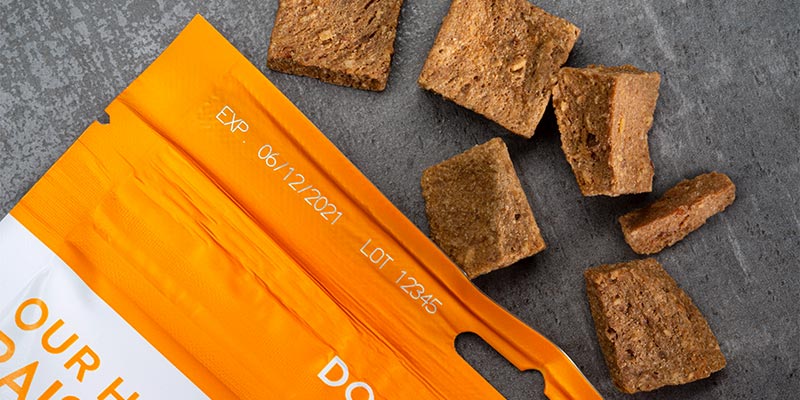
When it comes to coding technology, end users have a choice of inkjet printing and laser marking. The deployment of lasers depends primarily on the host material, but their primary advantage is that they deliver more premium-looking coding, which complements the look and feel of modern branded consumer packaged goods products. They also deliver a level of permanency and resilience that bolsters anti-diversion and anticounterfeiting efforts.
Fiber functionality
Although only relatively recently commercialized in the food and beverage industry, fiber lasers are rapidly gaining momentum in many coding applications, due to being easier to manipulate and target. They are also more compact compared to solid-state or gas lasers of comparable power, and because the delivery fiber can be coiled, they take up even less extremely valuable line-side real estate.
Fiber lasers create optical energy and operating wavelength using a set of diode lasers and a dual-clad optical fiber that is doped with rare-earth elements, such as erbium, ytterbium, neodymium, dysprosium, praseodymium, thulium, or holmium. This doped optical fiber is the medium that generates the laser’s output energy, which is of a much shorter wavelength and offers higher peak energy levels compared to CO2 equivalents.
This output gives them the ability to more effectively penetrate and code reflective materials, such as aluminium cans, thanks to exploiting a wavelength that provides for optimal material absorption. This delivers a more concentrated beam that contains enough power to print a high quality, highly legible code onto aluminium cans – to a depth of around 5-10 microns, in as little as 24 milliseconds – at production speeds as high as 1,500 cans per minute in a single-lane environment.
This code is then a permanent element of the can - it cannot be smudged or wiped off and its clarity and legibility help ensure downstream quality procedures are successful in terms of full batch traceability and identity.
Safety
Fiber lasers are categorized as Class 4 and require Class 1 guarding, using a stainless-steel guard to isolate the laser radiation and prevent injury to operators. Guarding packages can include baffles to dispel the beam and prevent it from bouncing and potentially exiting the enclosure. Safety compliance standards and regulations (e.g. ANSI, EN, OSHA, FDA) dictate how lasers are to be guarded, and Markem-Imaje offers a document that distils those regulations into a practical guideline for fiber laser guarding design options.
Installation
It is remarkably easy to integrate fiber lasers into an existing production line, and the laser system can be partnered with a variety of tools, such as those available from Markem-Imaje, to create an overall marking, reading and code storage solution, tailored to the needs of the end application.
As is the case with most technological purchases, when sourcing a coding solution, operators must consider the overall lifetime costs in terms of 365/24/7 operation and maintenance. The upfront cost for high-speed fiber lasers is more expensive versus inkjet solutions, but their maintenance costs are significantly less, as fiber lasers are virtually maintenance free. Apart from occasional filter replacement, there are no parts to replace or adjustments to be made – simply turn it on and watch it easily meet production demands, freeing up maintenance staff to work on more important things within the plant.
The benefits to employing fiber lasers are significant and cover all facets of the machine’s lifecycle from initial purchase through to ongoing operations and maintenance. The combination of high code quality, no maintenance, and the ability to integrate a host of ancillary items ensures that the finished product is perfect on each can, every time.