




Enforcement of the new FSMA Final Traceability Rule is just one year away; are you prepared?
In a drive to limit significant outbreaks of food contamination, the US FDA announced the FSMA Final Traceability Rule, which mandates a 24-hour window for locating the source of these occurrences. Entering into force from January 2026, for the first time across the US and its overseas territories, it will be compulsory to keep full traceability data on certain fresh foods responsible for most contamination outbreaks, or risk a significant fine, besides the reputational damage such events can cause to a brand.
Under the FSMA Final Traceability Rule, almost all US-based producers, retailers, distributors and their overseas suppliers are obliged to enable the fastest possible identification and tracking of a list of certain foods throughout the supply chain, which will simultaneously enable faster product recalls and limit the spread of contamination events. The products affected are as follows:
- All fresh chicken eggs;
- All fresh and frozen seafood and finfish, as well as smoked finfish;
- All soft cheeses, except those aseptically processed and packaged;
- Most fresh vegetables, including all species of leafy greens, cucumbers, peppers and fresh sprouted grains, nuts, and seeds;
- Most fresh fruit, including all species of tomatoes, melons and most tropical tree fruit such as mangoes and papaya. Exclusions include non-tree fruits such as bananas, pineapple, pit fruits like avocados, all citrus varieties and nut fruits;
- All ready-to-eat deli salads and all fruit and vegetables sold cut or in portions;
- All nut butters.
Key requirements under the FSMA Final Traceability Rule include the documentation of Critical Tracking Events (CTEs) such as growing, receiving, transforming, creating, and shipping of the above foods. Each of these events must be recorded with Key Data Elements (KDEs) including the name of the product, location identifiers, lot numbers, and dates of events like harvesting or shipping. From 2026, all companies producing or retailing the products mandated for food traceability must maintain a traceability plan outlining their traceability procedures, including how they handle and store KDEs and manage data in the event of a food safety issue. These records must be maintained in a format that is accessible and shareable with the FDA within 24 hours upon request during a food safety investigation.
The rule applies to all entities in the food supply chain involved with foods on the FDA’s list, including processors and packers, in addition to retailers and producers. Exemptions exist for certain small farms and food produced and sold directly to consumers. However, most businesses involved in the production and handling of the listed food items will need FSMA compliance, presenting challenges, not only at the farm level, but for those through the supply chain who have not faced such stringent track-and-trace regulations in the US, until now. From fishing vessels, which will have to collate data on-the-go, to importers, who may have multiple suppliers, will need to ensure the origin and destination of each product. Another challenge is for those producing, distributing and retailing products with multiple ingredients from different suppliers and locations covered by the rule like salads. This means that a large amount of data will have to be collected and made available in one place.
Data collection and capture for FSMA compliance
Although the FSMA Final Traceability Rule does not explicitly require businesses to use traceability software, without it, implementation of the rule’s demands in terms of food traceability data collection and its dissemination across the supply chain will be no mean feat. Traceability software automates the capture, storage, and retrieval of KDEs, reducing the risk of human error and ensuring that data is accurate. While manual recordkeeping systems can be time-consuming and prone to inaccuracies, traceability software centralizes data storage, making it easier to maintain and share records in the required formats.
In the event of a food safety incident, FSMA compliance requires the provision of traceability records to the FDA within 24 hours, favoring the use of traceability software systems to retrieve and share data quickly. Advanced traceability solutions also provide real-time visibility into the supply chain, enabling businesses to track products from source to shelf and respond promptly to potential issues. Traceability software solutions are also scalable, allowing companies to manage increasing volumes of data and providing the ability to integrate with in-house ERP and Manufacturing Execution Systems (MES) as well as the platforms of supply chain partners, fostering collaboration and ensuring a seamless flow of information.
Traceability software on the packaging line
Most ERP and MES providers can provide traceability software though usually as an expensive add-on service. The CoLOS® software suite makes an effective level of food traceability achievable at a lower cost than many major MES and ERP traceability offers, and allows data capture in real-time down to the unit level, if required. Designed specifically for production and with packaging lines in mind, CoLOS® requires less customization and can be integrated with virtually any system. This includes all data-collecting systems including ERPs like SAP, but also weighing scales, warehouse systems, quality systems and any automation systems. There is no storage problem because the software is Cloud-based.
Making food traceability data visible across the supply chain and beyond
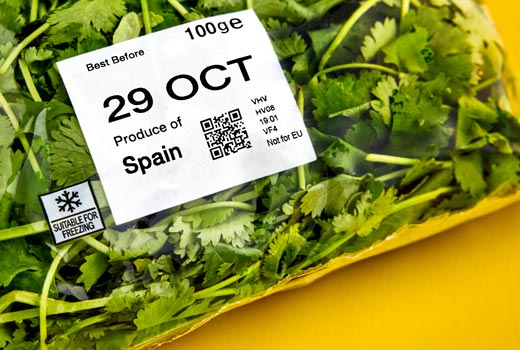
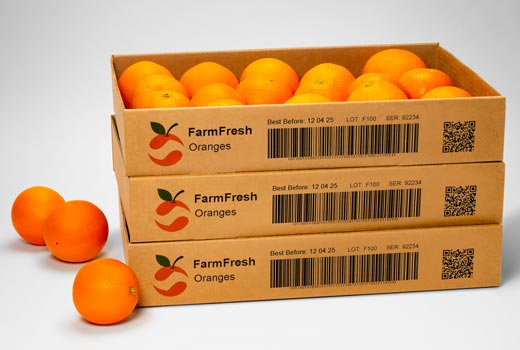
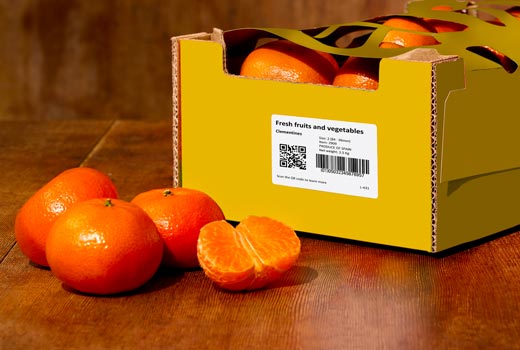
Once food traceability data is captured, FSMA compliance requires its possible dissemination to FDA regulators as well as all relevant actors across the supply chain, and beyond, including consumers. In this way, if a recall is required, retailers know exactly who bought the product and consumers themselves can rapidly find out about it. The easiest way to achieve the level of data visibility needed is via codes printed on the product packaging. Until recently, the amount of data contained in a code has been limited by space and technology, but the use of 2D codes like QR codes, which also permit data updates in real-time, allows vast amounts of information to be accessed with the scan of a phone. They only need to occupy a tiny space on product packaging, measuring just 2cm by 2cm (0.8 inches by 0.8 inches). This includes the new 2D global GS1 standard in this area, the Digital Link, which is currently being implemented worldwide in a gradual move away from traditional 1D barcodes.
When such a code is scanned, it can lead to a webpage with a unique number, with the possibility for real-time updates, facilitating rapid localization and product recalls. On such a website, producers can place information on when that product was harvested or produced, which farm(s) or fishing vessel the product or ingredients came from, and other information such as the route to market.
Coding hardware vital for FSMA compliance
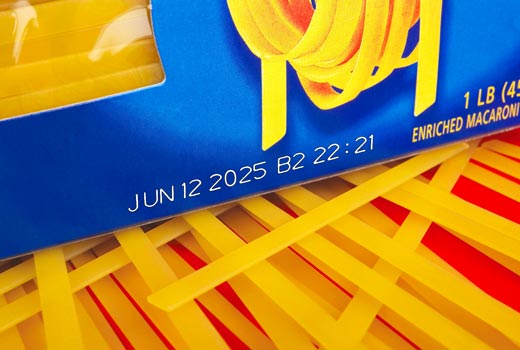
To produce phone scannable 2D codes, a high-quality coder, easily integrable with the production and/or packaging line, is paramount. As you may know, there are multiple printing technologies used to mark fresh food products, usually contained on the primary packaging substrate for retail, but also for substrates used in storage and transportation. Our coding technologies can produce high-quality 2D codes including the GS1 Digital Link, with the hardware choice dependent on the substrate to be marked, besides other considerations such as whether the surface is damp. We have a full range of coding solutions for FSMA compliance covering all substrates, comprising continuous inkjet (CIJ), CO2, fiber and UV laser, thermal transfer overprinting (TTO), thermal inkjet, print and apply (P&A) and large character Touch Dry• inkjet. If you have not already introduced 2D codes onto your product packaging, the fact that the FSMA enters into force in just one year may means that now could be the best time to consider their implementation.